
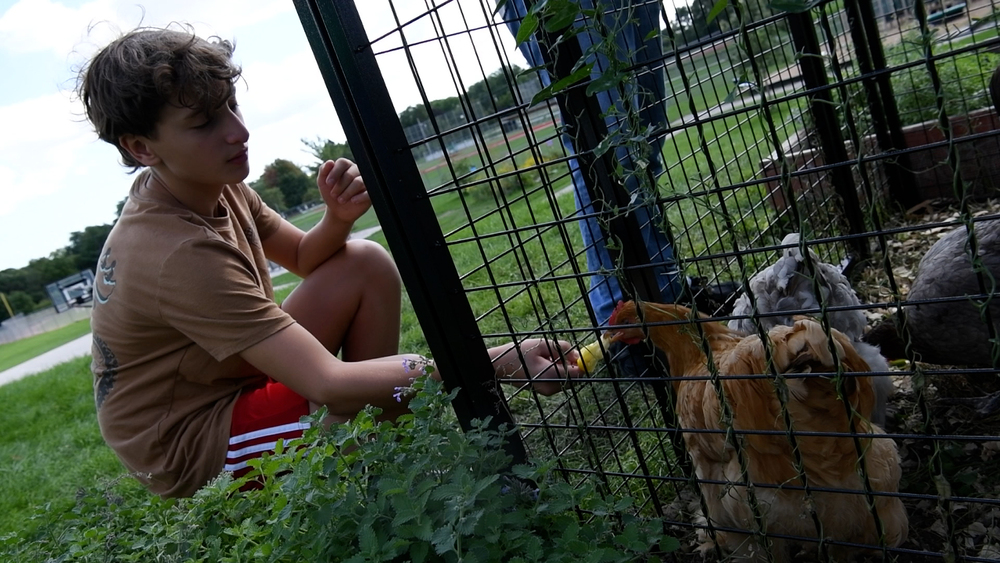
What started more than two years ago as a simple idea to help students connect with nature has officially hatched into a hands-on learning experience at Wauwatosa Montessori School. Thanks to the determination of Montessori students and staff, four chickens now call the school grounds home. Avian amenities include a predator-proof coop surrounded by the school’s gardens and a dedicated team of student caretakers.
However, welcoming the chickens required more than just building the coop. Students had to navigate the administrative process firsthand. They gathered signatures from surrounding neighbors, created detailed slideshows, and presented their proposal for school chickens directly to school district leadership, including the superintendent and the buildings and grounds division.
Now fully operational, the coop features a metal roof and secure gating designed to protect the chickens from wildlife, like hawks and coyotes. The space also offers a tranquil environment for the chickens to lay eggs and serves as an equally calming sanctuary for students.
Daily operations are entirely student-run. Caretakers head outside every afternoon to feed the birds, maintain the enclosure, and practice essential life skills. Beyond basic animal care, the routine teaches responsibility, patience, and team coordination — especially to ensure that the coop doors are secured so the curious birds don't wander off.
“We have to learn teamwork, … and it’s good for our learning in so many ways,” said Montessori seventh-grader August Hartsook.
Of course, keeping the coop running extends beyond the school-year calendar. During weekends, holidays, and extended breaks, the "Chicken Crew" steps up by inviting school community volunteers to sign up to care for the chickens each day. This shared effort ensures the chickens remain fed, watered, and safe, while giving local families and staff an active role in supporting the coop. Currently, the four feathered friends have yet to be named. The Montessori school community is actively collecting name suggestions.
For a school grounded in Montessori philosophy, the hands-on project is a natural fit. As Dr. Maria Montessori said, “What the hand does, the mind remembers.”
“Montessori learning is based in observation and in the ability to use all the different senses to observe the chickens. This is absolutely essential to basic Montessori principles of observation, so it's been really exciting,” Montessori general education assistant Katherine Mccullough said.
Beyond the educational value, students report an immediate emotional benefit, expressing that the coop is a comforting, joyful space to unwind after classes.
“I just felt like being able to interact with the chickens would make me calm down whenever I needed to,” said Montessori sixth-grader Dominic Travis. “So then after school, I'd go to the chickens and it would make me happy.”
[Check out this highlight video from our coop ribbon-cutting Shell-ebration].